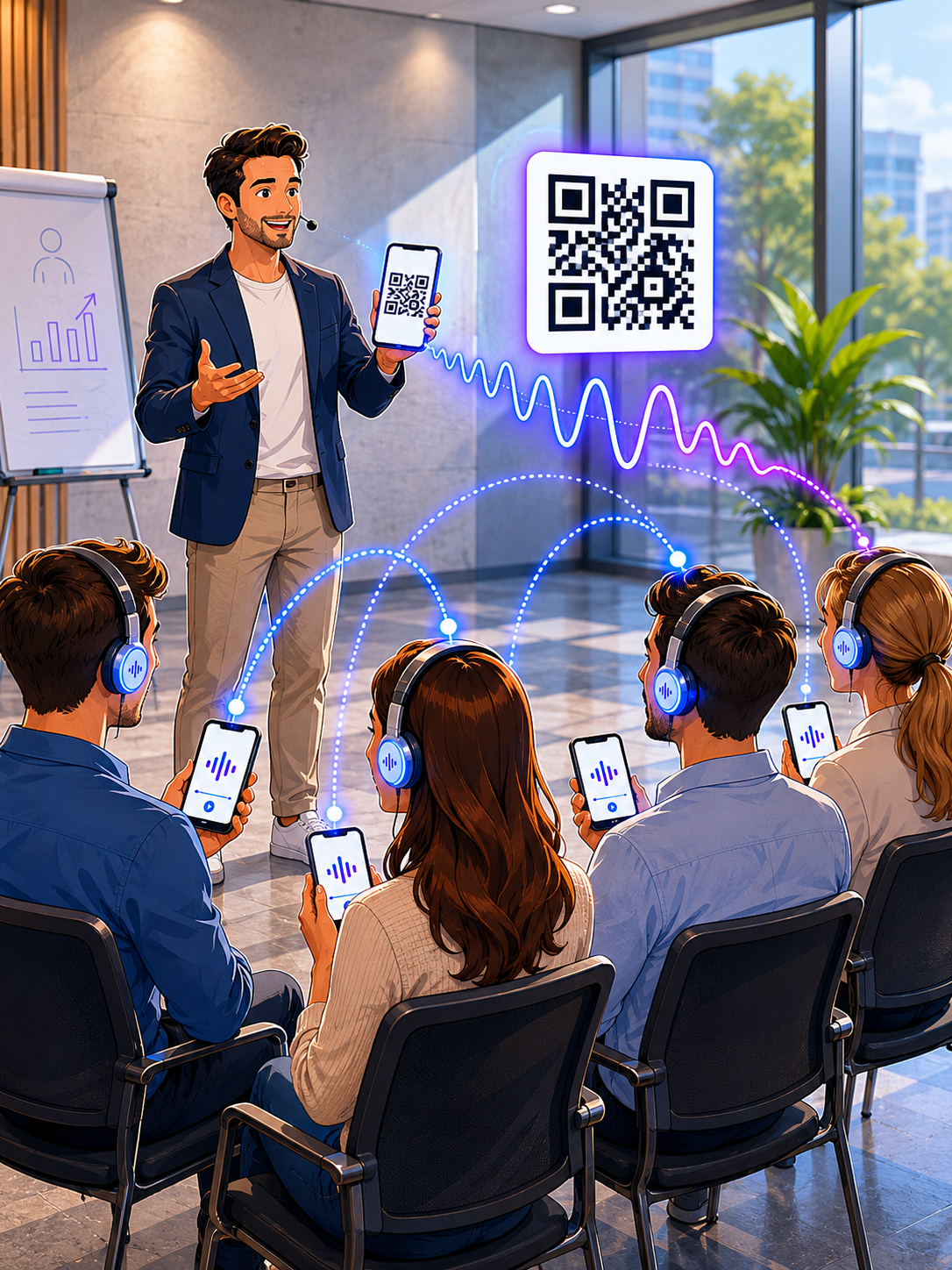
Solo speaker
The speaker creates an event, shows a QR code and starts speaking. The audience installs nothing, opens the link, chooses a language and listens.
- Fast start without a production crew.
- Useful for trainings, workshops and small talks.
Real situations where Stage delivers speech to the audience quickly: direct audio to phones, live translation, silent sound reinforcement or a two-way channel for questions.
The speaker creates an event, shows a QR code and starts speaking. The audience installs nothing, opens the link, chooses a language and listens.
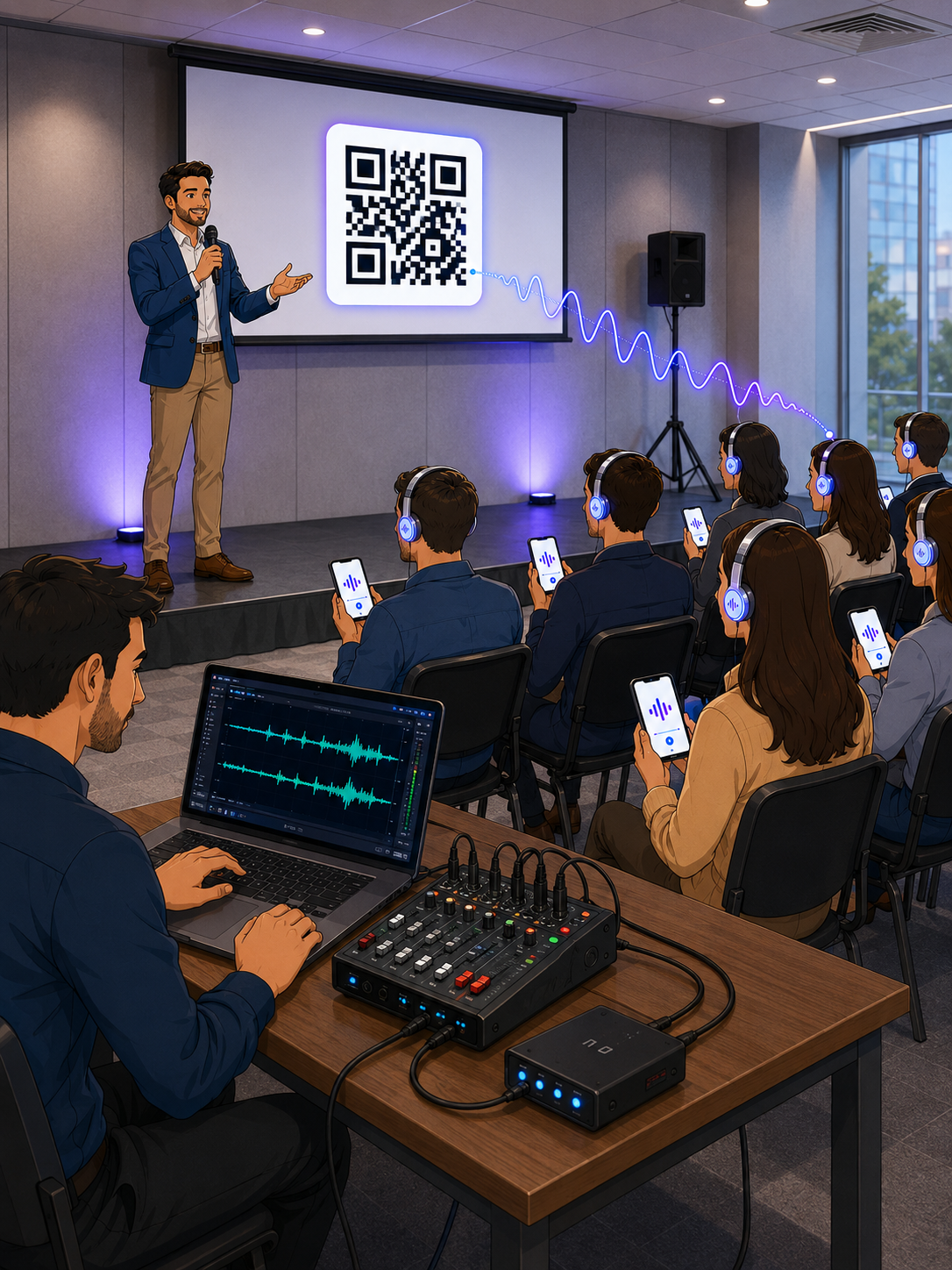
The team prepares the event in advance, sends the URL to attendees and shows the QR code on-site. Audio can come from a mixing desk through a computer or USB audio interface.
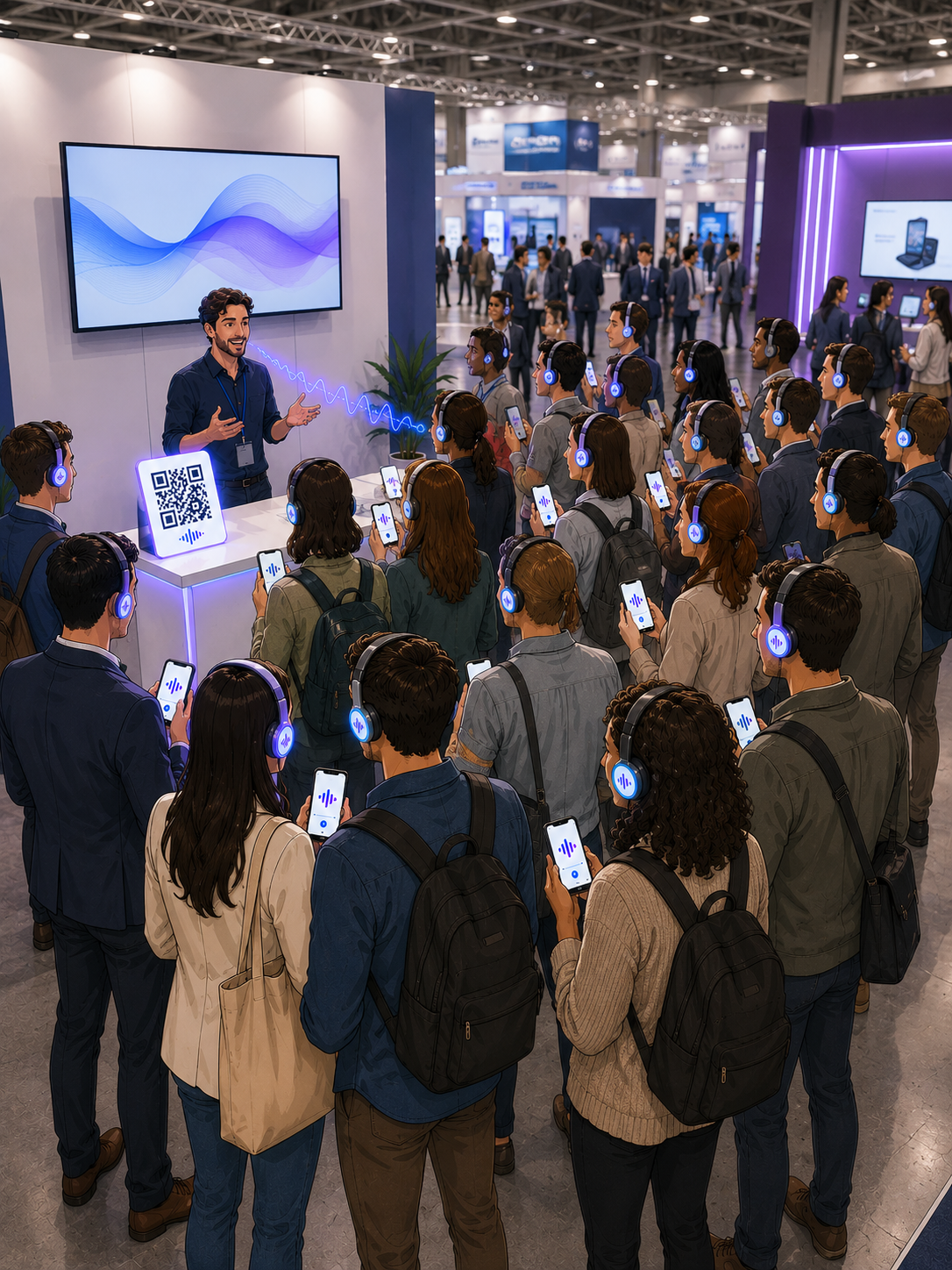
No shouting and no PA system at the booth. Visitors scan a QR code, choose a language and listen to the speaker, translation or original voice.
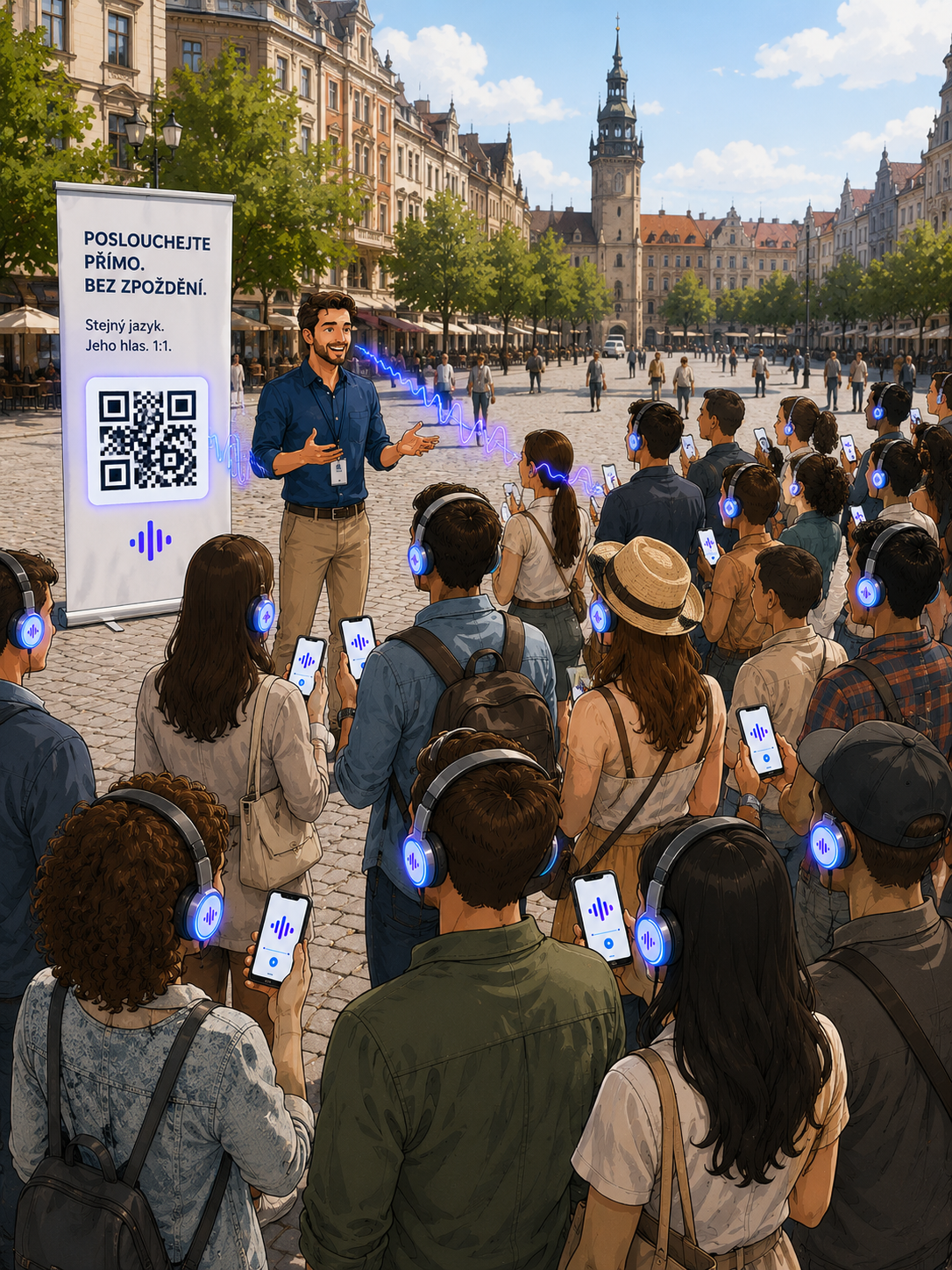
When translation is not needed, Stage works as quick personal sound reinforcement. A speaker in a public place shows a QR code and nearby people hear the voice directly on their phones.
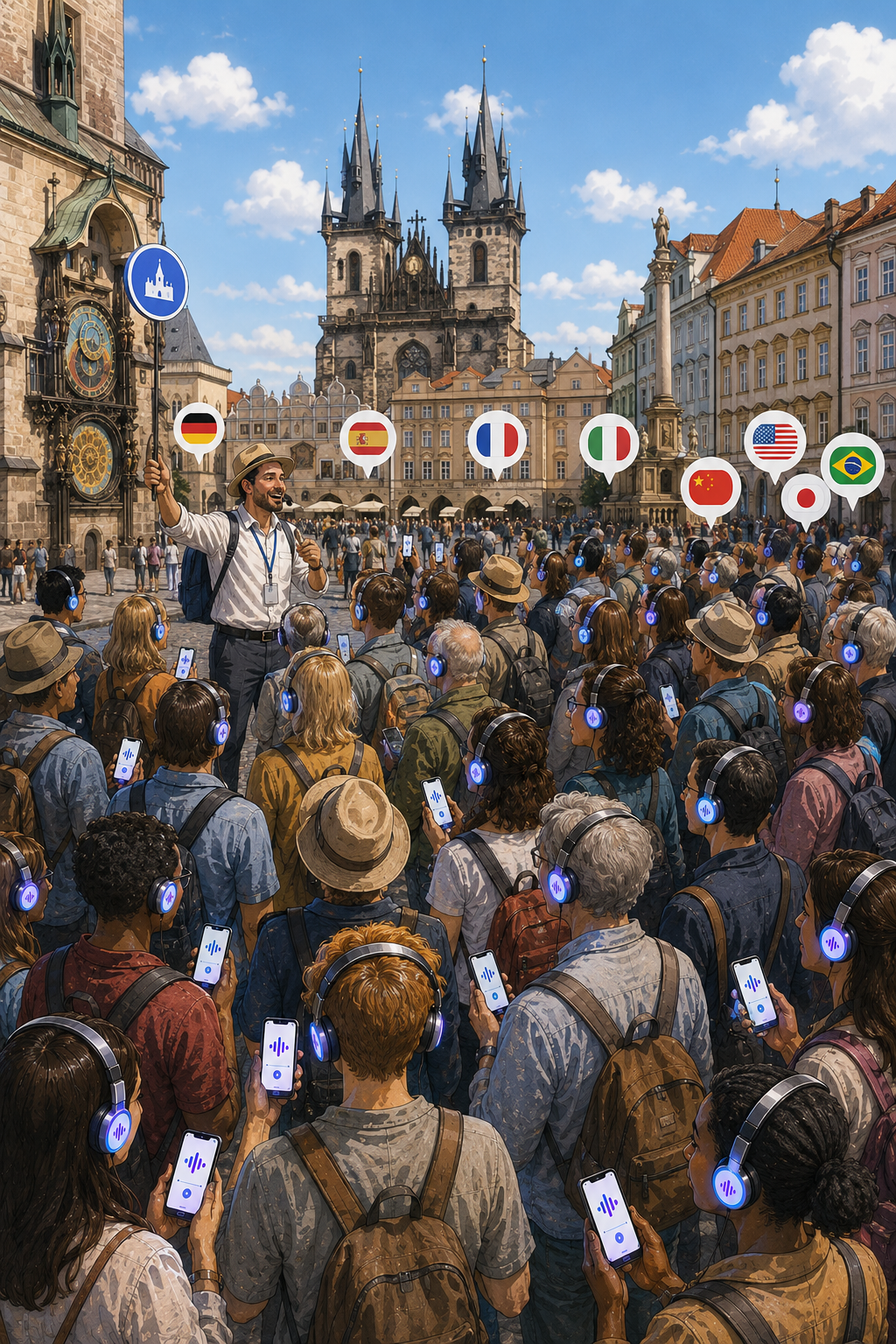
A guide speaks into a close microphone, for example over Bluetooth to a phone. Participants scan a QR code and hear the guide immediately in their headphones.
Registration is free. Create your first event, test the full workflow, and decide based on your own experience.